Illuminated Fragments: Alina Szapocznikow
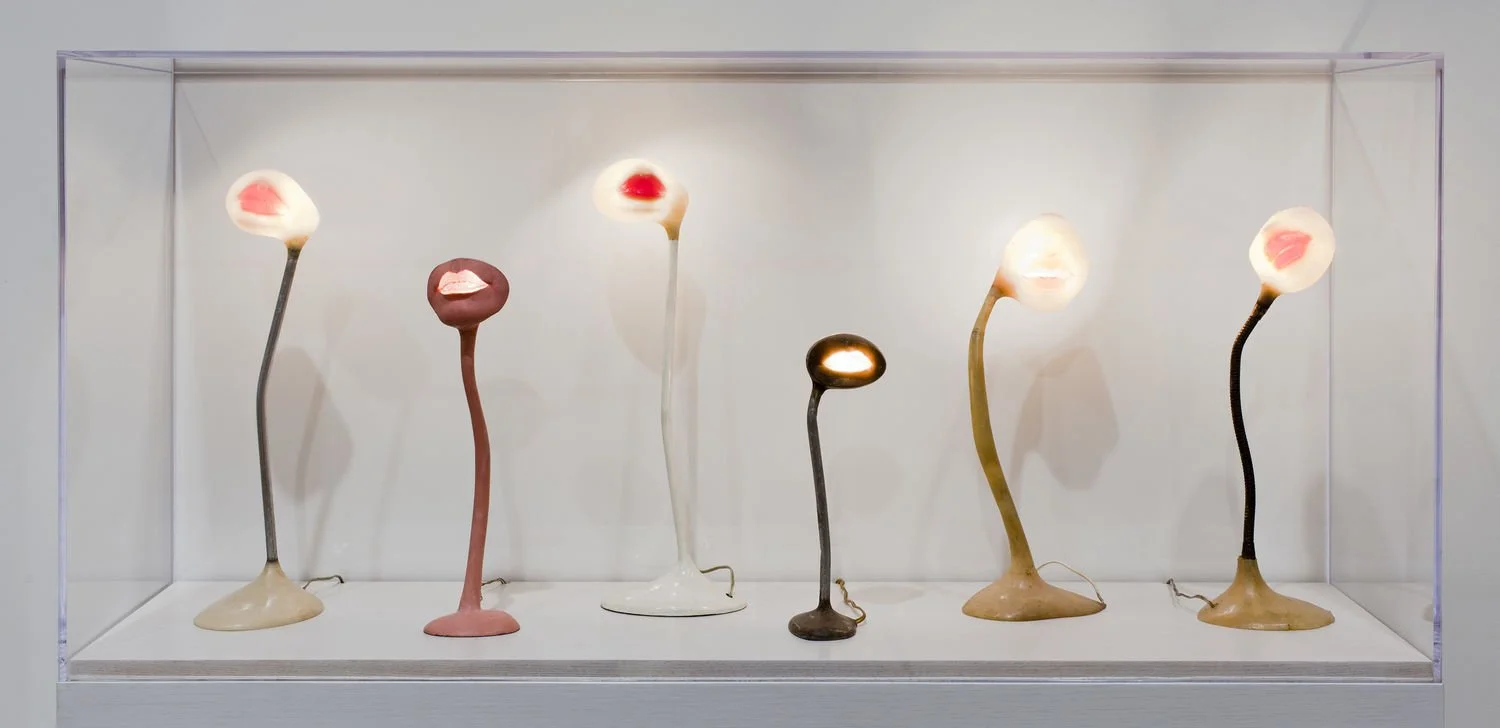
Illuminated Lips / Lampe-bouche, Alina Szapocznikow, 1960s. Installation view at the Hammer Museum, Los Angeles.
Alina Szapocznikow’s illuminated lip sculptures transform fragments of the body into objects that are at once intimate, seductive, humorous, and unsettling. In this installation view, the lips appear as glowing, disembodied forms mounted on thin stems. They resemble lamps, flowers, organs, cosmetic objects, or bodily relics. Rather than presenting the body as whole or stable, Szapocznikow isolates a fragment and turns it into something functional, artificial, and strangely alive.
I am drawn to the emotional complexity of these works. The lips are soft and sensual, but they are also severed from the body. Their glow gives them warmth and presence, yet the transparent display case also makes them feel preserved, clinical, or memorial. This tension between desire and vulnerability is important to my own practice. I am interested in how sculptural forms can appear tender, bodily, or attractive while also carrying feelings of discomfort, exposure, and fragility.
Szapocznikow’s use of light is especially relevant to my own work. The illuminated mouths suggest a body that continues to speak, glow, or emit presence even after fragmentation. Light becomes a sign of life, but also of artificiality. It animates the object while reminding us that this animation depends on an external technological system. This connects to my own use of internal light within creature-like forms, where illumination suggests warmth, healing, vulnerability, and hidden support.
Her work also helps me think about the relationship between the body and objecthood. By turning lips into lamps, Szapocznikow blurs the boundary between bodily fragment, commodity, prosthesis, and sculpture. The work feels both personal and mass-produced, erotic and strange, playful and wounded. This ambiguity resonates with my interest in forms that exist between living and non-living states. In my practice, felt, 3D-printed bioplastics, and light allow the sculptural body to appear both organic and artificial, fragile and technologically sustained.
The body does not need to be represented as complete in order to carry presence. A fragment can hold memory, desire, pain, and vitality. Her work encourages me to think about how my own sculptures might use partial forms, glowing interiors, and bodily suggestion to explore vulnerability, care, and survival without needing to return to wholeness.
Hammer Museum. “Alina Szapocznikow: Sculpture Undone, 1955–1972.” Accessed May 21, 2026. https://hammer.ucla.edu/exhibitions/2012/alina-szapocznikow-sculpture-undone-1955-1972
